UK Student Visa Refusal Reasons for Nepali Students (2026 Guide)
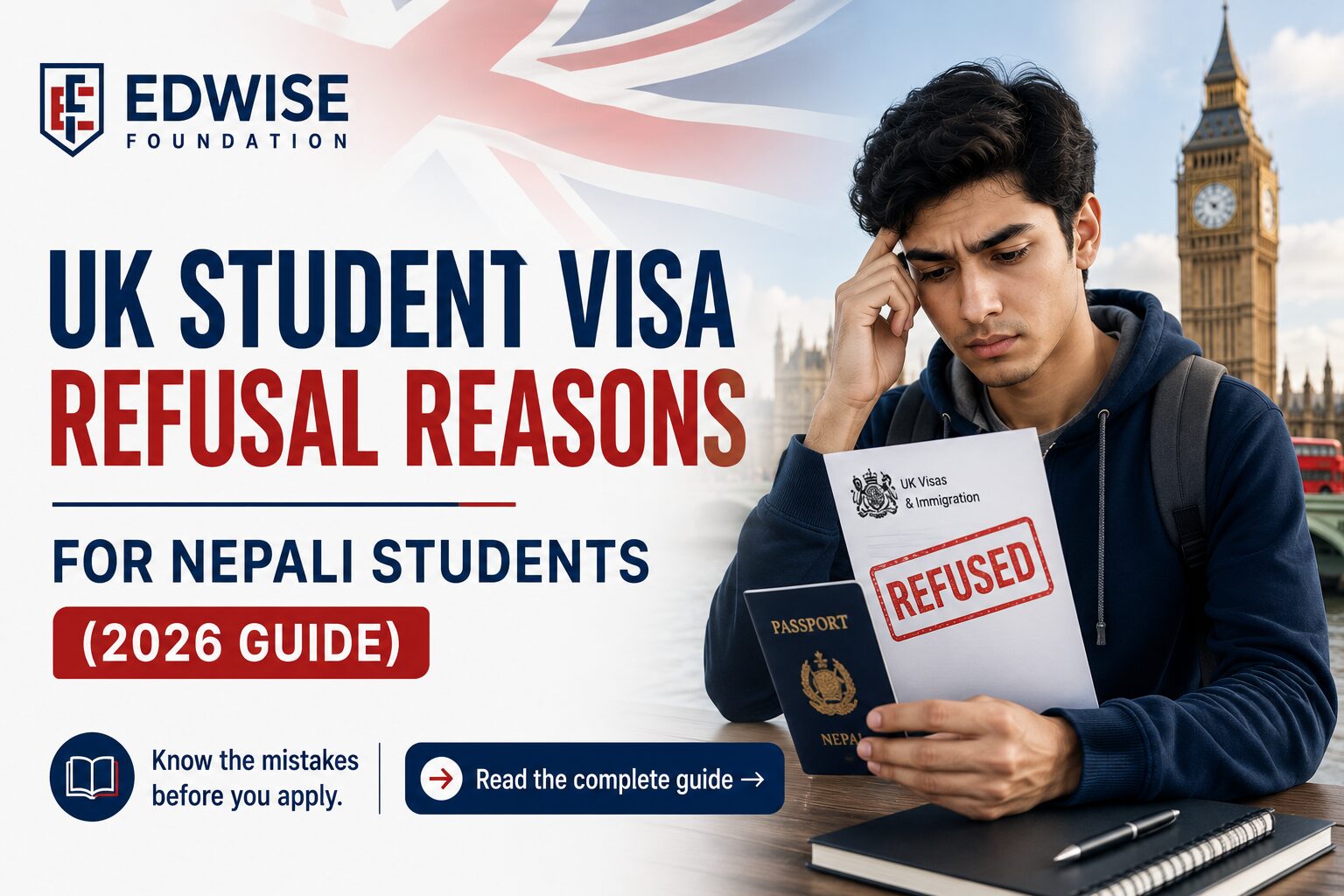
A UK student visa can be refused when an application does not fully meet UKVI’s requirements. For Nepali students, the most common reasons are financial evidence that falls short of the rules, inconsistent or incomplete information, CAS problems, missing documents, and credibility concerns. A refusal is not the end of your plans — in many cases you can reapply once you understand the refusal notice and fix the issues it raises. There is generally no mandatory waiting period, but reapplying without correcting the problems risks another refusal.
Receiving a UK student visa refusal can be frustrating, especially after months of preparing your university application, arranging finances, and completing the required paperwork.
Every year, some Nepali students receive refusals because of incomplete documentation, financial evidence issues, inconsistent information, or problems meeting UK immigration requirements.
The encouraging news is that a refusal does not necessarily mean the end of your plans to study in the UK. In many cases, students are able to submit a stronger application after understanding the reasons for the refusal and addressing the concerns raised by UK Visas and Immigration (UKVI).
This guide explains some of the most common reasons for UK student visa refusals among Nepali students, practical ways to avoid them, and the steps you can take before submitting a new application.
Can a UK student visa application be refused?
Yes. Every application is reviewed individually by UKVI, and a decision is based on whether the applicant has met the requirements set out in the UK’s immigration rules.
A refusal does not automatically prevent you from applying again. However, it is important to understand the reasons for the refusal before submitting a new application.
Common UK student visa refusal reasons for Nepali students
The nine reasons below are among the most frequent factors behind UK student visa refusals for applicants from Nepal. Understanding each one is the best way to avoid it.
Financial evidence does not meet UKVI requirements
Financial documentation remains one of the most important parts of a UK Student visa application. Depending on your circumstances and the latest UKVI requirements, you may need to demonstrate that sufficient funds are available to cover tuition fees and living expenses.
Common issues include:
- Insufficient funds
- Large unexplained deposits
- Funds not maintained for at least 28 consecutive days
- Financial evidence older than 31 days at the time of application
- Differences between names on documents
- Missing verification letters
- Documents that do not meet UKVI requirements
Before submitting your application, carefully review the latest guidance published by UKVI.
Incorrect, inconsistent, or incomplete information
Even small mistakes can create problems during the application process. Examples include:
- Different dates appearing on multiple documents
- Inconsistent employment information
- Incorrect travel history
- Differences in names or spellings
- Incomplete educational records
Accuracy and consistency are extremely important.
Problems with the Confirmation of Acceptance for Studies (CAS)
Your university must issue a valid Confirmation of Acceptance for Studies (CAS) before you apply for your visa. Potential problems may include:
- Expired CAS details
- Incorrect personal information
- Incorrect tuition fee information
- Differences between university records and visa documents
Always review your CAS carefully before submitting your application.
Missing supporting documents
Applicants are responsible for ensuring that all required documents are submitted correctly. These documents may include:
- A valid passport
- CAS details
- Financial evidence (where applicable)
- Academic records
- Tuberculosis (TB) test certificates
Missing documentation can result in delays or refusal.
Credibility concerns
UKVI may review whether an applicant genuinely intends to study in the UK. Officials may consider factors such as:
- Academic history
- Course selection
- Career plans
- Financial circumstances
- Previous immigration history
Applicants should be able to explain:
- Why they chose the UK
- Why they selected a particular university
- Why they selected their course
- How the programme supports their long-term goals
Our UK advisors review your documents, finances and CAS before you apply, and help you rebuild a stronger application after a refusal.
Book a free consultationPoor document quality
Documents should be clear, complete, and easy to read. Common problems include:
- Blurred scans
- Missing pages
- Cropped images
- Unclear signatures or stamps
Whenever possible, submit clear, high-quality copies of all documents.
English language requirements
Applicants should ensure that all English language requirements have been met according to the university’s policies. This may include:
- IELTS
- PTE
- Other recognised English language qualifications
- Alternative methods accepted by the university
All information should match the details included in your application and CAS.
Errors in the visa application form
Simple mistakes can lead to unnecessary complications. Examples include:
- Incorrect passport details
- Incorrect addresses
- Incomplete family information
- Missing travel history
- Incorrect financial information
Reviewing the application thoroughly before submission can help reduce the risk of errors.
Problems with the TB certificate
Students applying from Nepal are generally required to provide a valid tuberculosis (TB) test certificate issued by a UK-approved clinic. Common issues include:
- Expired certificates
- Name mismatches
- Certificates obtained from non-approved clinics
Applicants should ensure that all details are correct before submitting their applications.
Can you apply again after a UK student visa refusal?
In many situations, the answer is yes. There is generally no mandatory waiting period before submitting a new application. However, applicants should carefully review the refusal notice and address all concerns before applying again.
Submitting exactly the same information without correcting the underlying problems may increase the likelihood of another refusal.
What should you do after receiving a refusal?
- Step 1 — Review the refusal notice carefully. Read the decision thoroughly and identify every issue mentioned by UKVI.
- Step 2 — Correct the problems. This may involve updating information, obtaining additional documents, clarifying financial evidence, or requesting corrections from the university.
- Step 3 — Review your application again. Make sure all information is complete, accurate, and consistent.
- Step 4 — Submit a new application when appropriate. Only apply when you are confident that all concerns have been addressed.
How Edwise Foundation helps
As Nepal’s first AIRC-certified and ICEF-screened education consultancy, Edwise Foundation has guided Nepali students through the UK student visa process since 2005. Our advisors check your financial evidence against the 28-day rule, review your CAS and documents for consistency, and help you prepare for credibility questions — the areas where refusals most often happen. If you have already received a refusal, we help you understand the decision and rebuild a stronger application. With a 96% acceptance rate and 7,000+ students placed, our focus is on getting the details right the first time. For the full picture of studying in the UK, requirements and intakes, see our complete guide to study in the UK from Nepal.
Book a free consultation with our UK team for a full document and finance review before you apply — or after a refusal.
Book a free consultationFrequently asked questions