F1 Visa – A Guide to Obtaining Your F1 Visa
Last updated: 19 October 2026
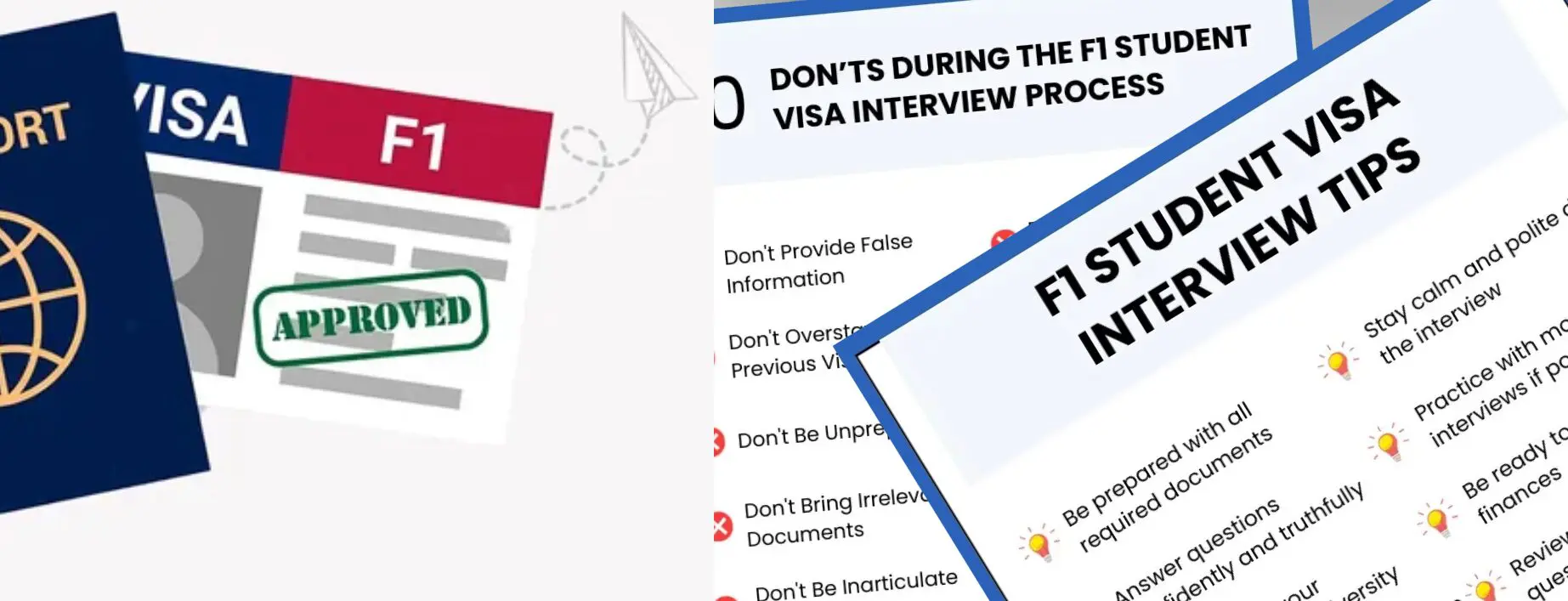
An F1 visa is the US student visa for full-time study at a university, college or language school approved by the US government (SEVP-certified). To get one from Nepal, you need an admission and a Form I-20 from your university. Next, you pay the SEVIS fee, complete the DS-160 form, pay the visa fee and attend an in-person interview at the US Embassy in Kathmandu. At the interview, you must show that you are a genuine student, can pay for your studies and plan to follow the visa rules. No consultancy can guarantee a visa, but complete documents and clear answers make a real difference.
The USA remains a top choice for Nepali students, and the F-1 student visa is the document that makes it possible. The process has more steps than most students expect, and several rules changed in 2025 and 2026. This guide brings the F1 visa requirements, documents, fees and steps together in one place, written for students applying from Nepal.
One important reminder before you start: do not book non-refundable flights until your visa is approved.
What is an F1 visa?
The F-1 visa (often written “F1 visa”) is a non-immigrant US visa for international students enrolled full-time in an academic program. That includes a Bachelor’s, Master’s, PhD, community college or English language course at an SEVP-certified school. It is different from the J-1 visa for exchange programs and the M-1 visa for vocational training.
The visa stamp in your passport lets you travel to the US and request entry. How long you can stay is decided by the officer at the US border and recorded on your I-94 record.
F1 visa requirements for Nepali students
To qualify, you must show the consular officer that:
- You are admitted to a full-time program at an SEVP-certified school and hold a valid Form I-20.
- You can pay for at least your first year of tuition and living costs, as shown on your I-20, with funds that are clearly explained.
- You are academically prepared for the course, with transcripts and English or entrance test scores where required.
- You are a genuine student whose study plan makes sense for your background and career goals.
- You intend to follow F-1 rules, including leaving the US when your permitted stay ends.
- You hold a valid passport, generally valid for at least six months beyond your intended stay.
F1 visa documents checklist (Nepal)
| Document | Why it is needed |
|---|---|
| Valid passport | Identity and visa stamping |
| Form I-20 (signed) | Proof of admission and SEVIS record |
| SEVIS I-901 fee receipt | Proof the SEVIS fee is paid |
| DS-160 confirmation page | Your online visa application |
| Visa fee receipt and appointment letter | Proof of payment and interview booking |
| Academic documents | SEE, +2/NEB and Bachelor’s transcripts, certificates and character certificates |
| Test scores | IELTS, TOEFL, Duolingo, SAT, GRE or GMAT, as required by your school |
| Financial documents | Bank balance certificate, sponsor letter and proof of the income behind the funds |
| Scholarship or funding letters | If any part of your costs is covered |
Officers rarely ask to see every document, but anything they ask for must be ready, consistent with your DS-160 and easy to explain. Funds that appeared suddenly in a bank account without a clear source are a common concern.
How to apply for an F1 visa from Nepal: step by step
- Step 1: Get admission and your I-20. Apply to SEVP-certified universities. After you accept an offer and submit financial documents, the school issues your Form I-20.
- Step 2: Pay the SEVIS I-901 fee. Pay online using the SEVIS ID on your I-20, and keep the receipt.
- Step 3: Complete the DS-160. Fill in the online application carefully. You must list every social media account you have used in the past five years.
- Step 4: Pay the visa fee and book your interview. Use the official US visa appointment website for Nepal. Interviews take place at the US Embassy in Kathmandu.
- Step 5: Attend your interview. Bring your passport, I-20, receipts and supporting documents. Fingerprints are usually taken at the embassy.
- Step 6: Collect your passport. If approved, your passport is returned with the F-1 visa stamp. Some cases go through extra administrative processing first.
Timing: your visa can be issued up to 365 days before your program start date, but you can enter the US only up to 30 days before that date. Start early, because interview slots fill up before the August and January intakes.
Our US team checks your documents, DS-160 and funding story before your interview.
Book a free consultationF1 visa fees
| Fee | Amount (US$) | When you pay |
|---|---|---|
| SEVIS I-901 fee | 350 | After receiving your I-20 |
| Visa application (MRV) fee | 185 | Before booking your interview |
| Visa integrity fee | 250 | Created by a 2025 US law; check whether the Kathmandu embassy is collecting it |
Fees are not refundable if your visa is refused. Always confirm current amounts on the official US Embassy Nepal and SEVIS websites before you pay.
The visa interview in Kathmandu
Most applicants must now attend an in-person interview. Interviews are short, so your answers need to be clear and honest. Officers usually want to understand:
- Why this course and university: how it fits your past studies and career plans.
- Who is paying: your sponsor, their income and how the funds were built up.
- Your plans after study: your career goals and ties to Nepal.
Most refusals are under Section 214(b), which means the officer was not convinced you qualify, often because of unclear funding, a weak study plan or inconsistent answers. A 214(b) refusal is not permanent. You can reapply when your circumstances or application have genuinely improved.
F-1 applicants are now asked to set their social media profiles to public so they can be reviewed. Make sure every account you use is listed on your DS-160.
New F-1 rules in 2026 every Nepali student should know
| Change | What it means | Status |
|---|---|---|
| End of “duration of status” | You are admitted until your I-20 program end date, up to a maximum of 4 years. Longer programs need an extension from USCIS. | In effect from 15 Sep 2026 |
| Shorter grace period | 30 days to leave after completing your studies or OPT, down from 60 | In effect from 15 Sep 2026 |
| Social media vetting | All accounts listed on the DS-160; profiles set to public | In effect |
| Proposed OPT fees | Large new fees for OPT work permission after study | Proposed Oct 2026, not in effect |
These changes do not stop Nepali students from getting F-1 visas. They do make careful program choice, accurate paperwork and planning ahead more important.
After your visa is approved
- Book flights to arrive no more than 30 days before your I-20 program start date.
- Carry your passport, I-20, SEVIS receipt and proof of funds in your hand luggage.
- After arrival, check your I-94 record online and confirm the admission date is correct.
- Report to your university’s international office (DSO) and keep your SEVIS record active.
How Edwise Foundation helps
Edwise Foundation has guided Nepali students to the USA since 2005. We are AIRC-certified, partner with 150+ universities and have placed 7,000+ students abroad. We help you choose the right program, prepare consistent financial documents, review your DS-160 and practise your interview. We do not script answers. We help you explain your own goals clearly and confidently. Learn more about our study in the USA from Nepal service.
Book a free counselling session at our New Plaza, Kathmandu office or online.
Book a free consultationFrequently asked questions
References
This article is for general information only and is not immigration or legal advice. Visa decisions are made solely by US consular officers. Always check the latest guidance from the U.S. Embassy in Nepal.