Australia Student Visa Changes 2026: Major Updates Every Nepali Student Should Know
Last updated: 15 October 2026 — student visa rules now in effect
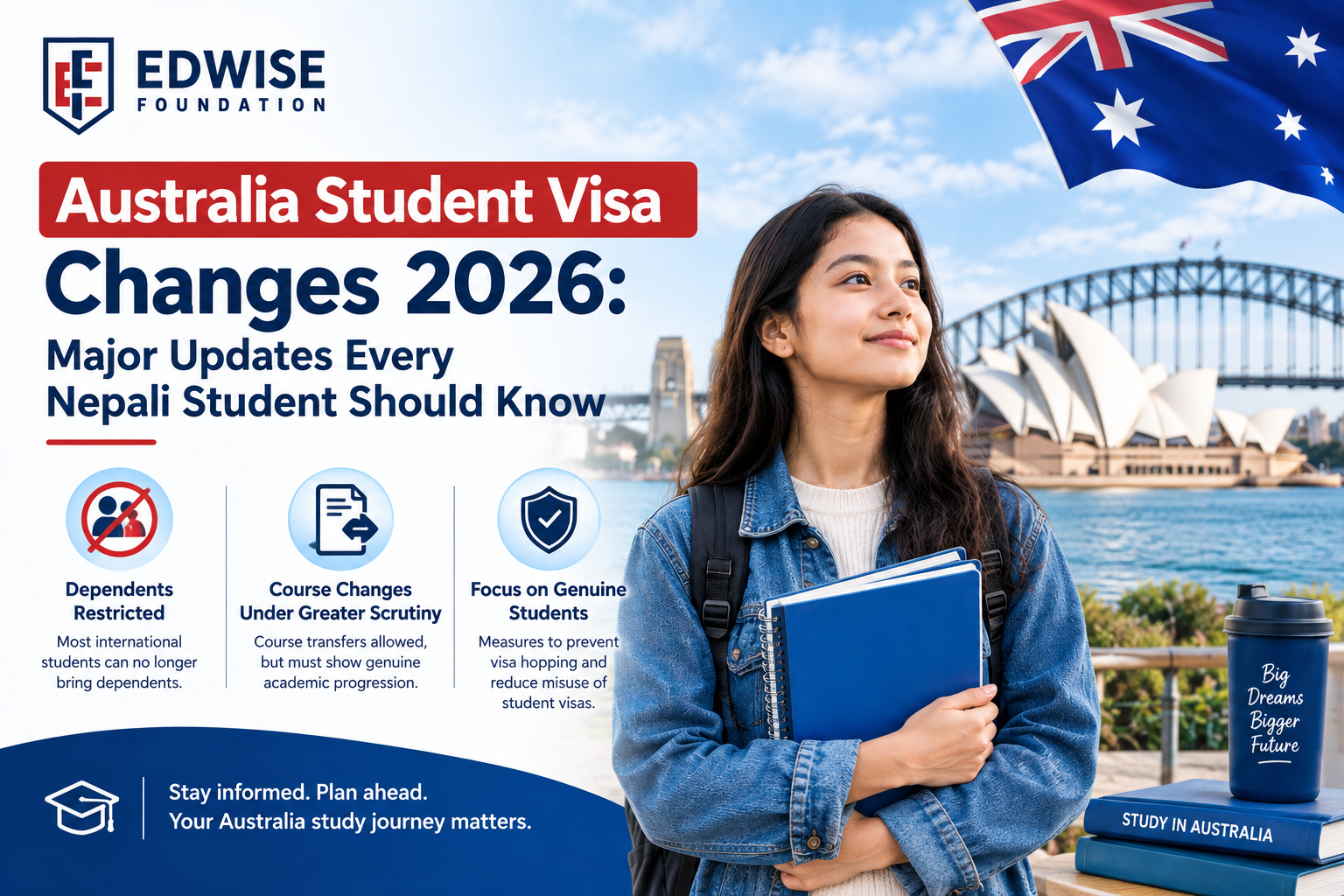
The Australia student visa changes for 2026 are now law, not just an announcement. For Nepali students, the three that matter most are: you generally cannot include a spouse or children in a new student visa application; most people already in Australia on a temporary visa cannot apply for a student visa onshore unless they are moving up to a higher-level course or fit another exemption; and visitor visas are being used only for genuine visits, so the “come as a visitor, switch to student” route is closing. On top of this, Nepal is assessed at Evidence Level 3, so your financial and English documents need to be complete from day one. Genuine students with a clear study plan are still welcome.
If you are a Nepali student planning to study in Australia, the Australia student visa changes for 2026 affect how you apply, who can come with you and what you can do once you arrive. The reforms were announced by Home Affairs Minister Tony Burke on 17 September 2026, and the main student visa rules took effect on 2 October 2026.
The good news: Australia has not closed its doors to genuine students. The changes target people using student and visitor visas mainly to extend their stay. If your goal is a quality degree and a clear career path, you can still plan confidently. You just need to plan differently. Below we explain each change in plain language, what is already in force and what is still pending.
Australia student visa changes 2026: what is in effect and what is pending
Many news reports from September described these changes as “proposed”. Several are now active. Here is where each one stands as of 15 October 2026:
| Change | Status | Date |
|---|---|---|
| No partner or children in most new student visa applications | In effect | 2 Oct 2026 |
| No adding family members after a student visa is granted | In effect | 2 Oct 2026 |
| Most temporary visa holders cannot apply for a student visa onshore | In effect | 2 Oct 2026 |
| “No Further Stay” condition on all new visitor visas | Announced, start date not yet published | — |
| Expression of interest system to control student numbers | Needs new legislation | — |
| Nepal assessed at Evidence Level 3 | In effect | Since Jan 2026 |
Applications lodged before 2 October 2026, including those that already listed family members, are assessed under the old rules. Student visas already granted are not affected.
Can you bring your spouse or children on an Australian student visa?
For most Nepali students, no. Since 2 October 2026, student visa applicants can no longer include a partner or dependent children in their application unless they fit an exemption. Current student visa holders also cannot add family members after their visa is granted, and there is no exemption to that rule.
Who can still include family?
According to the Department of Home Affairs, family members can still be included if the student is:
- Studying a PhD
- Sponsored by DFAT or Defence (Australian Government)
- Receiving a foreign government scholarship
- An eligible student from a Pacific country or an ASEAN member country
Nepal is not a Pacific or ASEAN country, so the regional exemption does not apply to Nepali students. In practice, the realistic routes for a Nepali student who wants to bring family are a PhD or a government-funded scholarship.
What this means for married Nepali students
Plan your budget as a single student. Many Nepali families previously counted on a spouse working in Australia to help with living costs. That option is now largely gone for Bachelor’s and Master’s students, so your financial plan must work on your own funds and your permitted part-time work alone.
Onshore applications and course changes: the end of “visa hopping”
Onshore means applying while you are physically inside Australia (in Nepali, अस्ट्रेलियाभित्रै बसेर आवेदन दिनु). Offshore means applying from outside Australia, for example from Nepal. Since 2 October 2026, most temporary visa holders, including current student visa holders who need a new student visa, can only apply onshore if they meet an exemption. Otherwise, they must leave Australia, apply from outside and stay outside until the visa is granted.
When can you still apply from inside Australia?
- You have finished your main course and are moving to a higher AQF level (for example, Bachelor’s → Master’s)
- You need up to 12 extra months to finish your course with the same provider
- You are moving to a PhD, or you are sponsored by DFAT or Defence
- Your education provider has defaulted and you cannot continue your course
- You are moving from school to a non-AQF course, or from a non-AQF course to an AQF course
If you finished a higher education course, your next course must also be a higher education course with a higher education provider. Moving from a Master’s down to a VET diploma, for example, no longer qualifies for an onshore application.
| Your move | Apply onshore? |
|---|---|
| Diploma → Bachelor’s | Yes, if the diploma is completed |
| Bachelor’s → Master’s | Yes |
| Master’s → PhD | Yes |
| Master’s → another Master’s | Generally no, apply offshore |
| Master’s → VET diploma | No, apply offshore |
Can you still change your course?
Yes. You are not locked into your first course. But if the change requires a new student visa and does not fit an exemption, you will have to apply from outside Australia. That costs time and money, so choose your course and institution carefully before you leave Nepal.
Visitor visa “No Further Stay” condition
The government has announced that all newly granted visitor visas will carry a “No Further Stay” condition (condition 8503). With 8503, you generally cannot apply for most other visas while in Australia. You must leave and apply from outside. A start date for applying it to every visitor visa had not been published at the time of this update, but 8503 can already be placed on individual visitor visas.
For Nepali students, the advice is simple: do not plan to enter Australia on a visitor visa and switch to a student visa later. Apply for the correct student visa from Nepal from the start.
Our counsellors will check your course plan, finances and family situation against the latest rules.
Book a free consultationNepal Evidence Level 3: what it means for your 2026 application
Australia assigns each country an evidence (assessment) level based on visa outcomes. Nepal is currently assessed at Evidence Level 3, the highest-scrutiny level, after a short period at Level 2 in 2025. At Level 3 you should expect to submit:
- Financial evidence showing you can cover tuition, living costs, travel and health cover (OSHC), with a clear source of funds
- English test results (IELTS, PTE, TOEFL or another accepted test) that meet the visa and course requirements
- A strong Genuine Student statement explaining your course choice, study gaps and ties to Nepal
Your university’s evidence level can differ from Nepal’s country level, so always check the Document Checklist Tool on the Home Affairs website for your exact combination. Together with the new onshore rules, Level 3 means your first application from Nepal needs to be complete and well documented.
Who is most affected among Nepali students?
- Married students and those with children: cannot include family unless studying a PhD or holding a government scholarship.
- Students already in Australia planning a second Master’s, a lateral move or a lower-level course: will usually need to apply from outside Australia.
- Graduates on other temporary visas hoping to return to study onshore: most will need to apply offshore.
- Families planning a visitor visa first: the visitor-to-student pathway is closing.
Students applying fresh from Nepal for a single, well-planned Bachelor’s or Master’s program are the least affected.
What should Nepali students do now?
- Budget as a single student. Do not count on a spouse’s income.
- Choose a course that fits your long-term goal, so any future study is a step up.
- Prepare Evidence Level 3 documents (funds, English results, Genuine Student statement) before you apply.
- Apply for your student visa from Nepal, not via a visitor visa.
- If you lodged before 2 October 2026, keep your lodgement records. The old rules apply to you.
- Check the Home Affairs website before you lodge, as the visitor visa and expression of interest measures are still to come.
The student visa rules on family members and onshore applications are in force. The “No Further Stay” condition for all visitor visas and the proposed expression of interest system for student visas are not fully in place yet. We will update this guide as Home Affairs publishes new instruments and dates.
How Edwise Foundation helps
New rules make the first application from Nepal more important than ever. Edwise Foundation has guided Nepali students since 2005, with AIRC certification and more than 7,000 students placed abroad. Our counsellors, many of whom studied abroad themselves, help you choose the right course and institution, prepare Evidence Level 3 documents and write a clear Genuine Student statement. We give honest advice. We cannot guarantee a visa, but we can make sure your application is accurate and complete. Learn more about our study in Australia from Nepal counselling service.
Book a free consultation and get a clear plan for your course, documents and visa.
Book a free consultationFrequently asked questions
References
This article is for general information only and is not immigration or legal advice. Rules can change, so always check the latest guidance from the Australian Department of Home Affairs and your education provider before making decisions.